

A proprietary six-tier IP asset, deployable across multiple domains.
MP-CET+ · FIELD MAINTENANCE INTERFACE
Purpose-built for field & sustainment-level
UAS/UAV maintenance.
The Multi-Purpose Combat Engineer Tool (MP-CET+) transforms legacy adjustable wrenches into mission-adaptable support tools for every domain — patent-pending, MOSA-aligned, and built to extract untapped value from assets already in the field.
The fleet refreshes every cycle.The tool inventory only grows.
Equipment is procured across many vendors, in many configurations, on ever shorter refresh cycles. Every platform that arrives brings its own driver set, its own hardware, and its own service kit — on land, in the air, and at sea.
The platforms are designed to be replaced. The tool inventory behind them was not — it only accumulates, carrying a line item, a training requirement, and a resupply chain for every tool ever added.
Instead of adding another single-purpose tool to an already-strained supply chain, MP-CET+ extracts untapped value from equipment that is already in the field — cutting logistics burden while giving operators more capability from what they already carry.
Asymmetric, Urban, Remote
Asymmetric warfare, urban combat, and remote operations demand tooling that is lightweight, multi-functional, and rapidly deployable — conditions a fixed tool roll was never designed for.
Reduced Soldier Load
Reducing carried load is a standing priority. Army and Special Operations units actively seek innovations that consolidate multiple tools into a single compact solution.
Dual-Use Capability
Growing emphasis on dual-use technology, where the same equipment adapts from combat tasks to disaster relief, humanitarian assistance, and expeditionary engineering.
One interface.
Every head.
MP-CET+ is a patent-pending core system engineered to integrate with existing adjustable wrenches — no new tool, no new training, no added weight in the pack. One core, multiple mission-specific configurations, built to adapt on demand across every domain and condition.
Weight reduction
40–60%*
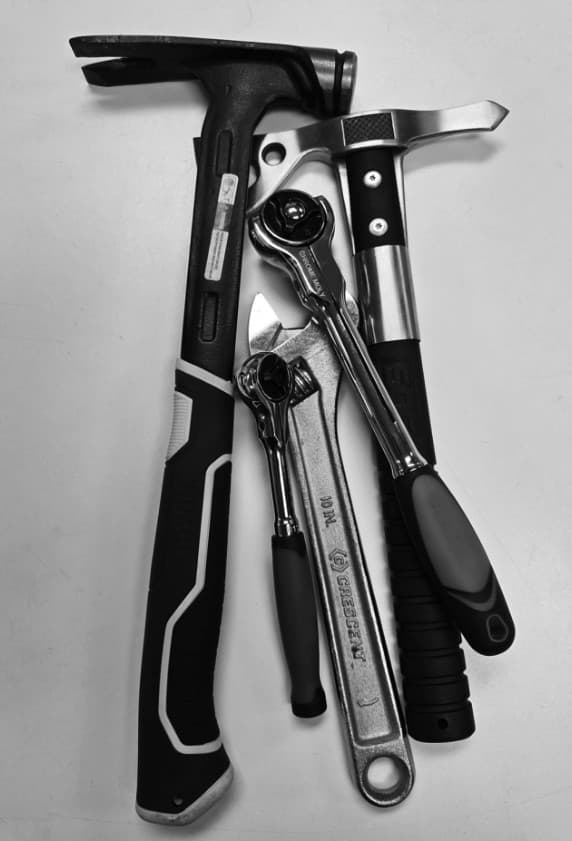
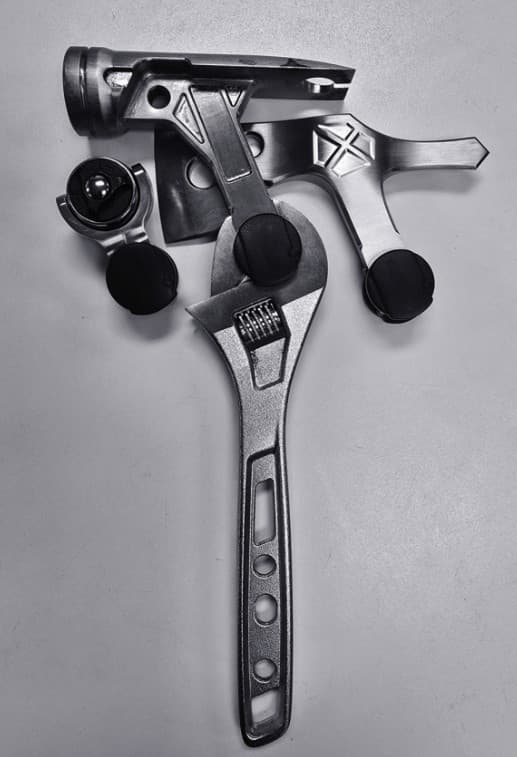
* Based on the tool set shown compared with the MP-CET+ configuration shown. Measurement basis is not published on this page.
Fig. 02 — Current demonstrated module set, as photographed above. Additional head modules are in development and are not depicted here.
Adjustable Wrench Interface
Integrates with existing adjustable wrenches
The core of the system is the wrench already in the inventory. Every head seats to a common interface — no proprietary handle, no new tool to issue.
Breaching Hatchet Head
Cutting edge · pry notch · lanyard ports
Clearing, breaching, and expedient field work without carrying a dedicated axe.
Engineer Hammer Head
Striking face · claw · nail slot
Driving, pulling, and demolition tasks on the same handle that just torqued a fastener.
1/4 in. Drive Ratchet Head
1/4 in. square drive · reversible
Fine fastener work in confined spaces — avionics bays, comms gear, weapons groups.
3/8 in. Drive Ratchet Head
3/8 in. square drive · reversible
The workhorse drive for vehicle and airframe maintenance at the point of failure.
Additional Heads
In development
The interface is the product. New mission profiles are added as heads, not as new tools.
One core.Multiple mission configurations.
Value extracted from equipment already in the field, rather than another single-purpose tool added to the supply chain.
Legacy Asset Optimization
Retrofits existing adjustable wrench inventories rather than replacing them, cutting new-equipment procurement cost.
Mission-Adaptive Reconfiguration
A single core adapts across maintenance tasks in the field, reducing tool proliferation and pack-out weight.
Reduced Logistics Burden
Fewer discrete tools to source, stock, and sustain across the supply chain.
MOSA Alignment
A Modular Open Systems Approach supports interoperability and rapid field-level reconfiguration without depot-level intervention.
Warfighter-Centered Design
Engineered for maintainer speed and reliability under expeditionary conditions.
Patent-Pending Core
Proprietary multi-utility architecture with dual-use commercial and defense applicability.
Why a tool maker licenses a platform
MP-CET+ is not another tool competing for shelf space. It is an interface that turns one core into a family of products, extends a catalog that already exists, and reaches defense and commercial markets from the same line.
A platform, not another SKU
One interface generates a family of head modules from a single core, rather than adding one more single-purpose tool to a crowded shelf.
ONE CORE — MANY SKUS
Extends a catalog instead of competing with it
Engineered to integrate with adjustable wrenches already in production. The platform builds on an existing line rather than displacing it.
RETROFITS EXISTING INVENTORY
Licensable as a platform
A patent-pending core with a proprietary six-tier architecture — the licensable asset is the interface itself, not a single finished tool.
PATENT-PENDING CORE
One core, many tasks
Striking, cutting, and driving tasks that today require separate tools to source, stock, and support are carried on one common shaft.
FEWER ITEMS TO SUPPORT
Defense and commercial from one line
Defense sustainment and commercial industrial maintenance draw on the same core, widening the addressable market without a second product line.
TWO MARKETS, ONE PLATFORM
Genuine American innovation
A design program built on genuine American innovation — positioned for partners whose reputation rests on craftsmanship and integrity rather than commodity sourcing.
BRAND-ALIGNED
Category expansion, line extension, defensible IP, and dual-use reach are four readouts of the same underlying idea: the value is in the interface, and the interface is licensable.
Built for multi-domain combat logistics
Multi-Domain Operations put the same maintainer across land, air, sea, and urban environments in a single deployment. An adapter architecture is designed to travel between them without a change of tool kit — and the same consolidation that serves a combat zone serves a humanitarian or disaster-relief mission.
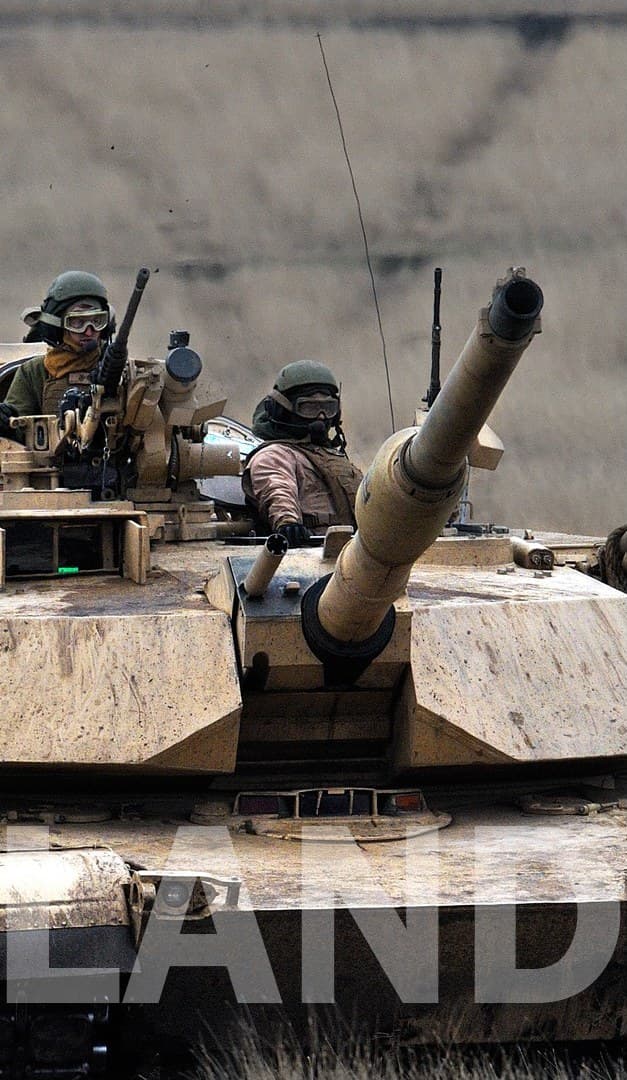
LAND
Armor and Ground Mobility
Combat logistics battalions sustain tracked and wheeled fleets forward of the maintenance bay. The MP-CET+ puts hatchet, hammer, and both ratchet drives on the handle a mechanic already carries.
AIR
Rotary and Fixed Wing
Flight-line maintenance rewards small kits and fast configuration changes. One handle, four heads, and the fastener sizes that matter — with less to account for and less to drop.
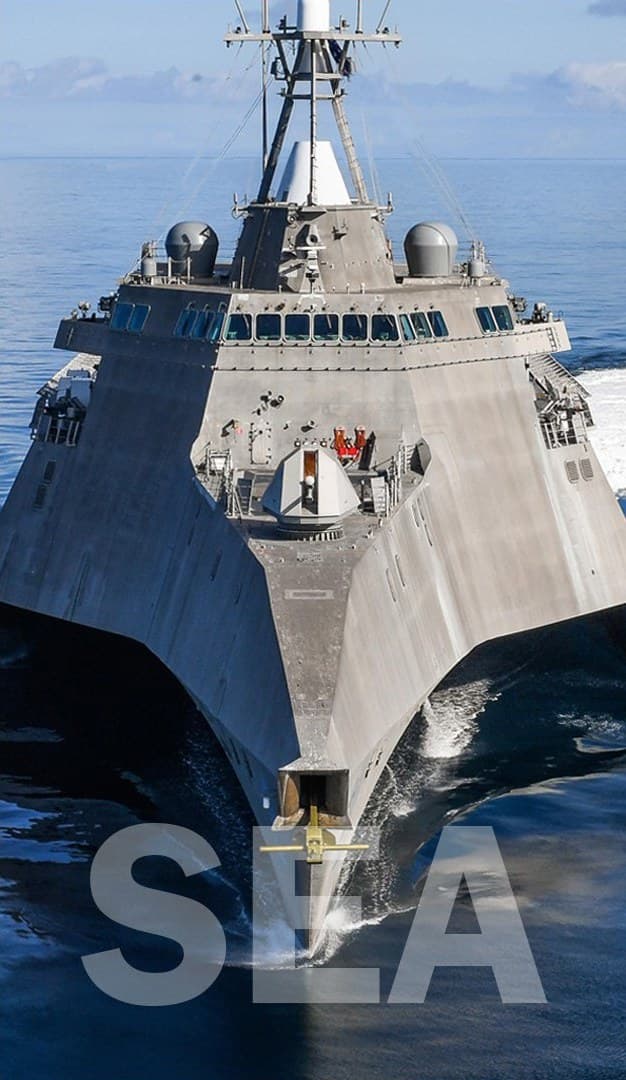
SEA
Surface and Shore
Seabees and shipboard maintainers operate where resupply is slow and stowage is measured in inches. Modularity is not a convenience at sea; it is a storage strategy.
What a maintainer carries today, and after
Legacy — one tool per task
- A dedicated hammer, carried whole
- A dedicated hatchet or axe
- Separate ratchets per drive size
- Task-specific driver and torque sets
- A duplicate handle under every head
- Storage and transport for each item
A separate line item, a separate resupply chain, and separate carried weight behind each.
MP-CET+ — one core, many heads
- Common shaft with tool-free ring lock
- Hatchet head
- Hammer head
- 1/4 in. and 3/8 in. ratchet heads
- Additional heads as the task set grows
- One handle, stowed flat
One core assembly to stock and support, with heads added as tasks require.
Architecture comparison. Quantities are deliberately omitted — a catalog crosswalk against a real program inventory has not been performed.
One platform, every domain and condition
MP-CET+ is not built for a single mission set. The same core serves defense sustainment, expeditionary operations, industrial maintenance, and a partner catalog looking to extend its line.
Not a concept. A finished system.
System Complete and Qualified
Technology Readiness Level 8. The design is complete and the system has been demonstrated in its final configuration.
Physical Modules, Not Renderings
The modules photographed on this page are manufactured hardware. Every capability shown is a part that exists.
Patent-Pending Core
A proprietary multi-utility architecture with dual-use commercial and defense applicability, held as a licensable platform.
The MP-CET+ is at TRL 8: a complete system, demonstrated in its final configuration. Engagement with partners is conducted directly.